James Brooks

James read Pharmacology at King’s College London before decamping to Paris to work as a head-hunter for the pharmaceutical industry. Following a stint as a reporter at the B2B magazine Executive Grapevine, James is now studying for an MA Science Journalism at City University. He is the author of three titles for unwritten French novels.

[email protected]
Find James' blog here My Last Nerve
Follow James on Twitter @jimbrux

Washington DC: the location of the AAAS meeting

As possibly the largest scientific non-profit organisation in the world and publisher of a raft of journals including the esteemed Science, the American Association for the Advancement of Science’s (AAAS) annual meeting is a major event in the calendar for thousands of senior researchers.

It’s the kind of thing can really only happen once a year: a six-day long conference including research presentations in every field of science given by researchers from across the globe.

This year’s conference, which ran from 17 to 22 February, had an extra international flavour, running with an overarching theme of “Science without borders”.

The Elements health team were unable to jet to Washington D.C., where the 177th AAAS meeting took place, but stayed glued the relevant news feeds, websites and Twitter accounts (sample tweet from the AAAS meeting: “Have you seen the brain-controlled telepresence robot demo? Head towards the food court in the exhibit hall to check it out.”) and are pleased to present you with 3 stories that caught our eye.

Health impact of climate change

Climate change is one phenomenon that knows no borders. On the Saturday of the conference, a team from the National Oceanic and Atmospheric Administration (NOAA) presented three studies designed to assess the possible impact of climate change on three separate populations living close to water.

The first of these was the population living in the Seattle area, around the Puget Sound. Every year the region’s shellfish industry closes down as the “red tide” caused by a kind of algae, encroaches. A toxin from the red tide can accumulate in shellfish and if eaten induces a potentially lethal sickness.

Using models of climate change, the scientists predicted that the red tide season would be extended by three months (it currently lasts for four) with an attendant increased risk to health and a serious impact on the local economy.

In the other two studies, the picture was equally troubling: increasing desertification in Morocco and the absorption of atmospheric dust into coastal waters will likely help seafood-borne bacteria enter the food supply and increased rainfall around the Great Lakes of North America may cause overflows in sewage systems.

“Liquid lens” for easier skin cancer diagnosis

Drop of water or hi-tech lens?

In more positive news, the practice for checking whether skin moles are cancerous may be set to change thanks to a microscope that can provide images from under the skin’s surface.

Currently, moles are excised and then tested in a lab to determine whether they are benign or malignant. However Professor Jannick Rolland of the University of Rochester, presented a device which may make such biopsies a thing of the past.

The tip of the foot-long probe she has developed is placed on the mole and within seconds a 3D image of what lies below the surface is displayed for the doctor to make his diagnosis.

This is thanks to a droplet of water, which replaces the glass used in conventional lenses. A change in the electrical field around that droplet leads to a change of its shape, and hence a change of focus. The device takes thousands of pictures focused at different depths below the skin’s surface and these are combined into one high resolution image.

Although initial tests of the device were successful, clinical trials need to be performed before the probe can be used by doctors.

Oral sex and cancer

The number of cases of oral cancers attributed to the human papilloma virus (HPV) has trebled in the US over the last 30 years. This troubling statistic was presented to conference attendees on Sunday by three senior clinicians in a session called “Oral sex is sex and can lead to cancer”.

HPV is most often associated with cervical cancer but there is now considerable evidence to suggest that the virus can infect the tonsils and eventually lead to cancers of the throat and mouth.

Professor Maura Gillison, who was one of the authors of the first paper to provide evidence of a link between HPV and oral cancer, said the post-war liberalisation of sexual attitudes had led to people having more sexual partners during their lives. “The higher the number of partners that you’ve had, the greater the odds that you’d have an oral infection,” she said.

Prof Gillison also argued that boys should be considered for routine vaccination against HPV.

In the US and UK girls are currently vaccinated against the virus around the age of 13 and although it might seem logical that the vaccines would also work against the strains of HPV thought to cause oral cancer, this has yet to be investigated in clinical trials.


Elsewhere on Elements, Richard Masters reports on the finding – also presented at the AAAS meeting – that lifelong bilinguals develop Alzheimer’s Disease later than speakers of only one language.

Images from Aaron Webb and Fir002/Flagstaffotos


Narrative medicine tries to help patients to tell their story

Is it possible for medicine to be too cold and, for want of a better word, clinical? Could physicians become preoccupied with treating disease and ignore their patients, to the detriment of medical practice? Is not medicine as much a caring profession as a scientific one?

Such are the concerns of the narrative medicine movement, founded by Professor Rita Charon of Columbia University in New York. Prof Charon holds a PhD in English literature alongside her medical degree and, as her movement’s name suggests, much of narrative medicine’s philosophy is informed by the importance of story-telling.

Narrative medicine encourages practitioners to listen attentively to patients’ histories, develop their own communication skills and thereby engage patients as active participants in their own care. It represents a subtle move away from the traditional, more authoritarian approach to medicine.

Narrative medicine has applications in all specialties but has been particularly influential in psychiatry where an approach to patient consultation called narrative therapy is gaining favour.

Dr Paul Wallang, a specialist registrar in forensic psychiatry at the John Howard Centre in London, is a proponent of the narrative approach. His paper on the subject in The Psychiatrist last year drew several responses: positive (in Dr Wallang’s words, “a lot of people who responded positively saw narrative as means of regaining a certain humanism within psychiatry”) as well as negative.

Concerned as it is with the mind, psychiatry is perhaps the medical specialty with the greatest tendency towards the abstract. In recognition of this, James Brooks fuses excerpts from his interview with Dr Wallang with the solo guitar of avant-garde musician Elliott Sharp in an experimental audio feature.

Listen to this audio feature:

Dr Paul Wallang, specialist registrar in forensic psychiatry, John Howard Centre, London

Transcript of the audio:

OK, I’m Paul Wallang, I’m one of the specialist registrars in forensic psychiatry at the John Howard Centre in London.

Well, I think probably the best place to start is talk about the history: where narrative medicine arose.

If we go right back to the 1700s and the enlightenment there was a general view at that point that reason should be very securely removed from unreasonable elements of society – people, generally, with mental illnesses.

And that’s how the whole asylum system came about. When those asylums were established people were basically detained there against their will, they weren’t given any opportunity to prove their reason.

Until probably the, I would say, the 1880s, coming into the 1900s, when, probably as a consequence of the work of Freud… and I know that not everybody is an admirer of Freud, but I think that one thing that he did do was give the patients a voice. But the important element there is that they’re given a voice through the analyst, through the therapist.

What narrative medicine tries to do is liberate the patient’s voice so that you no longer need the therapist.

People will probably ask: “Why’s that important?” Well, it’s important because the therapist inevitably puts certain biases on the voice or will ultimately misinterpret what the patient wants to say.

So, really, it’s not only a technique but it’s also a philosophy.

And actually the term ‘narrative medicine’ can be used in many different scenarios: it can be used in narrative therapy to help people confront problems that they have in mental health or it can be used to… what I’m particularly interested in is helping people to advance their communication skills to have a greater feel for patient narratives – the history that they tell – and also being able to express themselves as healthcare providers.

Now, you asked me about narrative therapy in particular and, like I said before, that’s to be differentiated from narrative medicine which is an umbrella term; narrative therapy is a very specific method that people use.

Narrative therapy came about probably in the 1990s, into the 2000s, and there was a very influential man called Michael White who worked in Australia.

So Michael White came up with Narrative therapy and really it’s about allowing the patient to express their story, and then therapy comes about by trying to find alternative narratives. And when I say an alternative narrative I mean one which is more helpful.

It would be different from a normal therapy session in that family members might be asked to come along and to explore the patient’s story, their narrative, the problems that they’d encountered and then there would be some collaboration about how an alternative narrative could be built. So, for example, a patient might have only one viewpoint of how that history could be interpreted and I suppose narrative therapy tries to show them that there are actually many viewpoints of that history.

Critics of narrative therapy say: “Well, how can the patient know which is the right one for them?” and really, I suppose, they don’t get the point of narrative therapy because it’s all about the exploration in itself, is what the therapy’s about: it’s not coming to the right answer particularly. Whereas in psychoanalysis, or certainly CBT [Cognitive Behavioural Therapy], you’re looking for a specific answer to these questions, whereas narrative therapy’s more about a kind of collaborative exploration with the patient: trying to give them tools or a different viewpoint to allow them live a better life.

It’s about trying to get away from knowledge being the privilege of one particular person in healthcare. Knowledge should not be the domain of only the healthcare provider, it should also be shared with those people who are being cared for as well and that’s a very big difference to how therapies or psychiatric philosophy has been in the past.

It really spearheads a philosophy of patient autonomy and that’s really my goal out of all of this.


Images: James Brooks (C) 2011, all rights reserved.

Music: “Otolith” by Elliott Sharp published by zOaR Music (BMI), available on the album The Velocity of Hue (2003, Emanem). Used with kind permission.

ResearchBlogging.org

Wallang, P. (2010). Wittgenstein’s legacy and narrative networks: incorporating a meaning-centred approach to patient consultation The Psychiatrist, 34 (4), 157-161 DOI: 10.1192/pb.bp.109.027474

Science and politics: how much should the two mix?

It was proof, if proof were needed, that sociological insights are not the unique preserve of academic experts.

At the end of last year I interviewed Dr Michael Bosch, a GP working in suburban Surrey, for an article I was writing on the attitudes of GPs to the upcoming NHS reforms.

Dr Bosch is a member of one of the new GP consortia that will collectively take responsibility for over 70% of the NHS budget by selecting and commissioning local healthcare services from competing providers.

Continue reading »

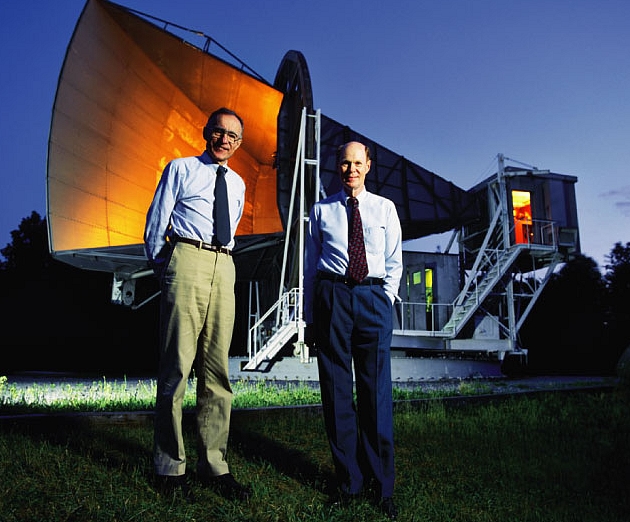
In 1964, before the proliferation of the microchip, communications science used some rather unwieldy kit.

The Horn Antenna

Early that year, NASA launched the second of its pioneering communications satellites, Echo 2, into the atmosphere. Echo 2 was a spherical helium balloon 135 feet in diameter and coated with a silvery plastic that reflected radio and microwaves beamed from the Earth.

Down below, on a hill in New Jersey, Arno Penzias and Robert Wilson set to work measuring the radio waves reflected by this gargantuan balloon and its predecessor, Echo 1.

Continue reading »

One of the biggest brands in Britain - the NHS faces its "most radical reform... in its 60 year history"

NHS Managers are “about to go into the biggest challenge of [their] professional careers demoralised, with heads down and unfit” according to senior NHS executive Mike Farrar.

Farrar, who heads up the North West Strategic Health Authority (SHA), the UK’s second largest, said that the “biggest barrier” to sweeping reforms laid out by the government in the Health and Social Care Bill “is a lack of belief and desire to win in the people that have to make it happen.”

The government plans to phase out the SHAs and Primary Care Trusts (PCTs) that currently oversee much of the decision-making in the NHS. Thousands of people are expected to lose their jobs.

However, the SHAs and PCTs will play a vital role in the transitory period between the old organisation and the new; they must transfer their responsibilities to GPs and local authorities who, together, will control more than 70 per cent of the NHS budget.

Farrar called the plans “the most radical reform of the health service that we’ve seen in its 60 year history”. He said he believed most NHS managers would have approved the proposals had they been introduced individually but “few would have suggested [implementing them] at the same time in an environment where you have little money to oil the wheels of change and you’re telling the people who will oversee the change that they’ll have no job at the end of it.”

Farrar was speaking at a seminar at Cass Business School in London held after the release of the NHS White Paper, the document which prefigured the current bill.

Memberships

Member Button linking to the Association of British Science Writers (ABSW) - an association of science writers, journalists, broadcasters and science-based communications professionals - many of whom are available for freelance work