Débora Miranda

Débora studied Communication Sciences in her sunny home country Portugal, then moved to Germany to study journalism and worked for Deutsche Welle radio. Finally, she went to Brussels to explore the complicated structure of the European Commission, returned to Germany for some more live programmes, night shifts and challenging interviews. In the end, she went to London to report on one of the most fascinating fields of journalism: Health.

[email protected]
Follow Debora on Twitter @debmir
Find Debora's Portuguese blog here www.debdiletante.wordpress.com
Find Debora's English blog here www.mindourmind.wordpress.com


Fareha Lasker and Debora Miranda interviewed medical students to get their perspective

Medical students seem most worried about the logistics of their future career. They do not want to become “paperwork dogsbodies” but remain caregivers.

The proposed reforms mean a lot of GP time will be spent managing or budgeting – skills that are not taught formally during medical student training until they have already made the choice to specialise in General Practice.

Currently, students learn about the running of a practice informally through talking to GP’s. Third year placements do include ones where patient management in the community is maximised but little time is spent on ensuring students learn essential management skills.

The students feel a longer placement in general practice could help, but the most successful way would be through formal business management.

Harriet Dewhurst is an intercalating student, meaning she is taking a year out of the traditional medical training to learn about other related fields such as immunology and disaster medicine. She believes offering intercalating students the choice of business management as a module could make all the difference. Continue reading »

The leader de facto of Libya, Muammar al-Gaddafi.

To what extent do political tensions and natural disasters impact your daily routine? It may be happening across the world, but eventually what goes around comes around.

We invite you to join our discussion and contribute your ideas and experiences.

Debora - The turmoil in North Africa and the Middle East is spreading. After Tunisia and Egypt, the biggest tension now seems to be happening in Libya, where some groups of the population are protesting since late February, asking president Muammar Gaddafi to resign.

Libya is not only one of the biggest oil producers in Africa, but it also has the largest oil reserves in the continent, exporting 1.3 million barrels per day. The International Energy Agency said recently the production has almost ground to a halt, and exports are likely to be off for months. This is leading to an economic slowdown in the North African oil industry and consequently a strong rise in the oil prices. It’s a very critical situation that will certainly have an impact in our routines and lifestyles.

Mike – It will, but that won’t be particularly noticeable in the UK. In fact, rail ticket prices rose by around 6 per cent on average and 13 per cent in some areas at the start of January. Actually, only around 4p in every pound we spend on rail tickets goes towards fuel costs. But it wasn’t that fuel prices were rising that the tickets became more expensive – it’s because of inflation.

Continue reading »

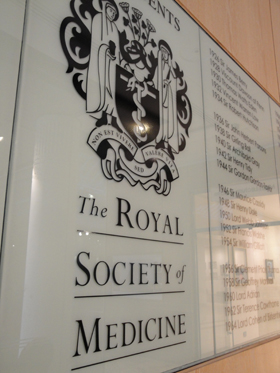
The crest of the Royal Society of Medicine

The Royal Society of Medicine brought together law, ethics, health and EU voices

Networking is key to a collective health service in the EU, the Europeanisation of Health Care conference was told.

The London event, held at the Royal Society of Medicine in February, featured experts such as Professor David Kerr, President of the European Society of Medical Oncology.

Professor Kerr quoted the evolutionary theorist Peter Kropotkin to deliver his message: “The fittest are those species best able to achieve cooperation”.

Kerr emphasised the need for European Union (EU) member states to cooperate more in order to overcome the gaps in health care provision between successful and struggling countries.

Professor Mark McCarthy of the Public Health Research Group at University College London reiterated the point saying the European Union “needs to avoid a divide between the strongest innovating regions and the others”. Continue reading »

The evolution of multiple sclerosis compromises the patient's independence

I had seen John before but never met him. Iris, my friend back in Brussels, was very close to John. She truly liked him, which explains why I saw her crying a few times at home.

One day Iris could not keep the secret anymore: “John might have MS,” she told me.

Not knowing whether you have multiple sclerosis must be unbearable. From that day on, whenever I saw John drunk at our traineeship evenings I better understood his situation, rather than just thinking he was another Briton with a taste for drink.

When John first noticed something was going wrong with his body, it was the start of a nightmare. This dynamic, and frankly gorgeous, young man underwent several medical exams with different doctors.

The only symptoms he complained of were fatigue, weakness, poor concentration and an unstable mood. I tried to be positive and told Iris: “That could be any other disease.” But doctors told John that it was likely he had MS.

There is no cure for multiple sclerosis, a disease that affects millions of people worldwide. In MS, the patient’s own immune system attacks the myelin sheath, a layer of cells that insulate the nerve fibres carrying impulses from the brain to the muscles. When the myelin is degraded the insulation breaks down and those impulses are disrupted.

The disease progresses gradually, over years and leaves patients wheelchair-bound. For this reason it is known as a degenerative disease.

Degenerative diseases gradually rob a person of their mobility, so independence quickly becomes a priority for people with this diagnosis.

But suit-clad policy-makers seem to have little time to consider the daily routine of such patients. Now, of course spending cuts are poised to hit crucial health services – services that to politicians mean money but to patients mean a matter of life or death.

A recent report in the Guardian described the fears of one MS patient who stands to lose her monthly £400 disability living allowance. “Life is not worth living,” she said.

She may not be alone in feeling that way. Millions of people who had the misfortune of being diagnosed with a degenerative disease depend on this money. They need to maintain a positive outlook on life or their problems can quickly overwhelm them.

And one should not forget those who have a double misfortune: being diagnosed with a degenerative disease in countries where disability allowances do not even exist. These are people who can only depend on their family and friends, if at all.

Call me naïve if you wish, but I wonder why health increasingly seems to play second fiddle to economic concerns. If only 100,000 people in the UK are affected by multiple sclerosis, why does the Government have to cut the money that improves the life of these patients?

Yet whenever there is a human story behind a medical term for a disease, people start thinking differently.

Last year, Harry Potter author JK Rowling donated £10 million to set up a clinic for research into treatments for MS. The illness had killed her mother at the age of 45.

A few months later, further good news came to the media as scientists showed that the damage caused to nerve cells in MS could be reversed by activating stem cells in the body. The study has identified a means by which the brain’s own stem cells can be encouraged to repair damage.

In fact, “therapies that repair damage have been the missing link in treating multiple sclerosis,” according to Prof Robin Franklin who led the research.

The findings brought a glimmer of hope to researchers, patients and those who have been fighting for more investment in the disease. The Multiple Sclerosis Society said this was one of the most exciting developments in recent years: “It’s hard to put into words how revolutionary this discovery could be and how critical it is to continue research into MS.

“We’re delighted to have funded the first stage of this work and we’re now looking into funding it further.”

Meanwhile, John is still unsure about his condition. Doctors both in Belgium and the UK cannot tell whether he has MS or not. The doubt itself is killing his youth.


To protect the people mentioned in this story, their names have been changed.


Picture courtesy of U.S. Brookhaven National Laboratory

ResearchBlogging.org
Huang, J., Jarjour, A., Oumesmar, B., Kerninon, C., Williams, A., Krezel, W., Kagechika, H., Bauer, J., Zhao, C., Evercooren, A., Chambon, P., ffrench-Constant, C., & Franklin, R. (2010). Retinoid X receptor gamma signaling accelerates CNS remyelination Nature Neuroscience, 14 (1), 45-53 DOI: 10.1038/nn.2702


The European Society of Cardiology is so concerned about the dangerous links between diabetes type two and cardiovascular disease that it’s designated the 14th November World Diabetes Day. Watch the video to know more about the links between diabetes and cardiovascular disease.

Continue reading »

Memberships

Member Button linking to the Association of British Science Writers (ABSW) - an association of science writers, journalists, broadcasters and science-based communications professionals - many of whom are available for freelance work