





Tens of thousands of NATO soldiers will be leaving Afghanistan this year, an event that will come as a relief to many loved ones.
But it will also present a challenge, as some soldiers readjust to post-combat life only to find that they can’t entirely leave it behind.
Post-traumatic stress disorder (PTSD) affects as many as 300,000 American troops out of the nearly 2 million currently deployed. PTSD is an anxiety disorder triggered by a traumatic event, with symptoms including flashbacks, emotional numbness and agitation.
It can be a debilitating illness, and also maddeningly random: many soldiers exposed to trauma will be unaffected by PTSD.
Knowing why this is the case would be helpful, not least for the military. If soldiers could be screened for future susceptibility to PTSD before deployment, their duties could be tailored to limit traumatic exposure, or they could have extra counselling beforehand. Or, perhaps, they could be deemed unfit to deploy in the first place.
The US Department of Defense is funding research to try to develop such a test. But, like most psychological illnesses, PTSD is a complex condition influenced by genes and the environment. So, while physicians have methods to diagnose and treat the illness, they have very limited ability to predict who it may strike.
Screening genes
Part of PTSD susceptibility is clearly genetic. The most extensive demonstration of genetic significance used data from the Vietnam Era Twin Registry, a collection of over 4,000 twin brothers who served in the US military during the Vietnam War. An analysis in 1993 found that, after adjusting for differences in traumatic experiences, genetic factors accounted for about 30 per cent of the men’s likelihood of PTSD.
Since then, improvements in gene technology have allowed researchers to begin the hunt for specific genes behind this effect. Most of the research to date has focused on genes that play a role in the action of two neurotransmitters, or molecules that carry signals between brain cells: serotonin and dopamine.
Changes in serotonin levels in the brain are linked to depression and anxiety, and research has found that these mood disorders also increase the chance of developing PTSD. Dopamine plays a role in motivation, mood, attention and working memory.
One of the most promising serotonin-related genes is called 5-HTT. It encodes the serotonin transporter, a protein found in the brain. It sits on the surface of brain cells called neurons and sucks serotonin back into the neuron to be used again.
A 2005 study found that patients suffering from PTSD tended to have a slightly different serotonin transporter than patients who were unaffected. This altered serotonin transporter is also linked to more anxious responses to stressful events.
While scientists largely agree on serotonin’s role in PTSD, they are more divided on the involvement of dopamine. Human studies have found a relationship between dopamine levels and PTSD symptoms. However, thus far, genetic association studies of dopamine and PTSD have delivered conflicting results.
Furthermore, an ongoing genetic study, sponsored by the US Department of Defense, is taking a different approach. Rather than examining genes that predispose someone to PTSD symptoms, the team is looking at genes that could make someone more prone to experiencing traumatic events in the first place.
Personality traits like neuroticism (negative emotional state) and impulsiveness, the researchers reason, have been found to be linked to PTSD. And a gene called calcyon contributes to impulsive behaviour, as well as to its dysfunction in attention deficit hyperactivity disorder (ADHD). Therefore, the researchers are studying whether a variant of calcyon can make soldiers more likely to develop PTSD.
To do this, they’re running a study on 276 active-duty US soldiers and veterans, about half of whom show symptoms of PTSD. The type of study, called a genetic association study, tests whether a certain DNA sequence occurs more often in people with the disorder than in those unaffected. If it does, that could indicate that the altered gene is contributing to the disease.
The results, expected in the next few months, may someday contribute to a screen for high-risk soldiers.
Surrogate metrics
Despite promising research findings, genetics studies will likely remain crude screening tools for PTSD. This is simply because PTSD, like most psychiatric disorders, is a complex illness with many contributing genes, each producing a small part of the overall effect.
Therefore, researchers have begun to investigate other behavioural markers that could indicate a predisposition to PTSD. At the forefront of this approach is Professor Michael Telch, a psychologist at the University of Texas at Austin.
Between 2007 and 2009, Telch and his colleagues conducted a wide range of behavioural and psychological tests on 177 soldiers before they were deployed to Iraq. After deployment, the soldiers completed monthly online questionnaires about their recent experiences and symptoms of stress, anxiety or depression. The soldiers have now completed their duties and the researchers have analysed the early measures to see if they accurately predicted who would go on to display symptoms of PTSD.
One of the effective predictors, the researchers found, was soldiers’ reactions to emotive faces. In a study published last year, they reported on a gaze-tracking experiment, wherein each soldier was asked to look at a computer screen that displayed various photos. The soldiers’ eye movements were monitored by a camera as they looked at each image, which showed the same actor in different moods: happy, sad, fearful or blank.
Soldiers who would later show above-average anxiety in response to combat stress were found to have avoided fearful faces on the test. And those who later went on to display greater depression than average were found to have dwelt on the sad faces.
Another test involved having the participants breathe air enriched with carbon dioxide, which makes people feel lightheaded. Immediately afterwards, participants filled out questionnaires that assessed how anxious the experience made them. The researchers found that higher CO2-induced anxiety correlated with more symptoms of anxiety and PTSD on the battlefield.
Finally, brain scans have shown promise in predicting PTSD sensitivity. One brain region in particular, the amygdala, has been studied in relation to PTSD by both Telch’s group and others. The amygdala is involved in assessing threats, and has been found to be hyperactive in people with anxiety disorders. One 2009 study found that a hyperactive amygdala was an accurate predictor of which Israeli combat paramedics would go on to develop PTSD.
Screened out?
Though the predictors of PTSD are many and varied – and more will no doubt be found – a screen for soldiers is likely to be a long way off. As it stands, the US Congress now mandates a more thorough pre-deployment mental health screening than ever before. Self-reported anxiety or depression may be just as powerful as all the tricks and tests above to predict which soldiers will be susceptible to PTSD.
Still, the Department of Defense is spending millions of dollars on the STRONG STAR research consortium on PTSD, one of the aims of which is to predict more accurately who will suffer from the illness.
The project’s genetic research is led by Professor Doug Williamson, a researcher with STRONG STAR and faculty member at the University of Texas Health Science Center at San Antonio.
Williamson’s team took blood samples from over 4,000 US soldiers who were deployed to Iraq or Afghanistan. Those soldiers are now returning, and in Spring 2012, their blood samples will be taken again, alongside the military’s standard health assessment. The goal of the research is to see which genes were turned up or damped down in the soldiers, and whether that correlated with development of PTSD.
But, he says, there is “no chance whatsoever” that the military would use such information for genetic profiling. Rather, it would be an indicator of which soldiers needed special training. “Our ability to understand our predisposition to something can inform how we manage the situation,” he explained. Exercises like “stress inoculation” are already used to prepare soldiers for combat, and could be expanded upon for individuals who were found to be predisposed to PTSD. Or, perhaps someday, drugs could be developed to turn up protective genes or turn down damaging ones.
Even if a battery of PTSD-predictor tests were developed, Williamson says, a screen would be challenging because the illness is not a black-or-white proposition. “These biomarkers shift your risk but it never moves you from no risk to 100 per cent risk, from complete functionality to no functionality,” he said. “It doesn’t do that.”
The military’s research continues with the aim of finding such a screen. But its eventual uses – to protect soldiers or to prevent them from serving – remain as murky as the illness itself.
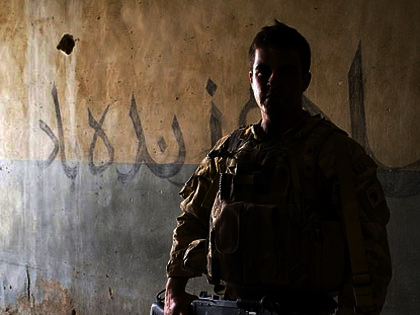
Image courtesy of Defence Images via Flickr